Showing posts with label Marketing. Show all posts

Friday, April 3, 2015

4 Things You Need to Know to Market to Millennials

via Ad Week

Warped Tour founder dishes decades of advice
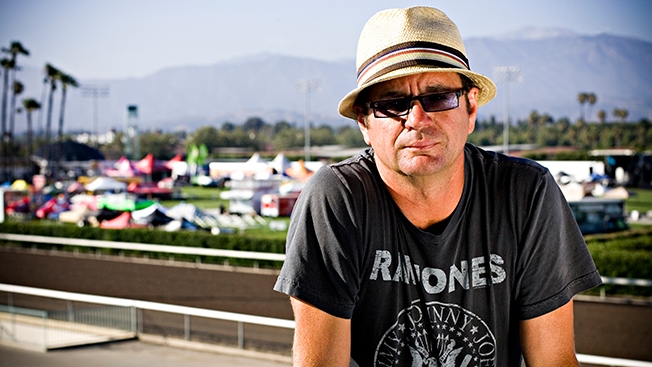
Kevin Lyman understands the millennial mind. Photo: Chad Singstock
If anyone understands the millennial mind (or that of Gen Z, coming up right behind it), it's Kevin Lyman. Since founding the live music event and brand strategy firm 4Fini in 1995, Lyman hasn't just immersed himself in youth culture—he has helped brands like Truth, Ernie Ball and Journeys stay connected to it. The Vans Warped Tour—his cornerstone event, which jams up to 100 bands into 10 hours of portable, mud-filled mayhem—is now the longest-running festival tour in North America. In his more than two decades as a marketer and promoter, Lyman has learned a thing or two about reaching teens and young adults. Here, he shares some of his best practices.

A brand must show utility.
The brands that sign onto Lyman's concerts aren't just those paying to be represented. They must forge a genuine connection to attendees, he said. For example, Rockstar Energy Drink, the title sponsor of the Rockstar Mayhem Festival, promotes the fact that its underwriting of the show helps keep ticket prices aligned with millennial wallets. And when Monster wanted to hand out free samples of its energy drink—with 160 mg of caffeine in each 16-ounce can—Lyman convinced the sponsor that filling those cans with water was a better idea, as it kept the already-pumped-up-enough crowds hydrated while providing valuable exposure for the product. "The fan wants to see why the brands are there," Lyman said. "They want to feel like the brand is bringing something more than marketing to them."
Millennials are not all the same age, nor do they behave that way.
According to the Pew Research Center, millennials were born as early as 1980, which means the target group is as young as 19 and as old as 35. The differences among that wide range of consumers are apparent in marketing live music. While younger millennials will spend the money and have the stamina to attend a multiday event like Coachella, postcollege millennials more often have responsibilities that restrict both their disposable income and time.
If marketers want to reach older millennials, Lyman said, a one-day event with a relatively low admission price makes more sense. "Craft beers are very happening for that audience right now, and mixing it in with a very focused type of music that sometimes can relate to where they were when they were 15 or 16—nostalgia for them—makes a lot of sense," he said. 
The Vans Warped Tour has become famous for its happy anarchy. Pictured: The band A Day to Remember performed in Tinley Park, Ill., last year. Such events offer brands an opportunity to connect with young consumers. | Photo: Chelsea Lauren/Getty Image
The backlash against social media pitchmen has already begun.
Lyman said the wealth of digital content out there makes it difficult to digest all the brand messages, especially since millennials are smart enough to recognize a paid pitchman, including by way of a 15-second Instagram video. In fact, Lyman's experience suggests that tangible goods are a more effective marketing tool than a social pitch. When Lyman surveyed millennial attendees of the South by Southwest Music Festival this year, it turned out that what they most wanted was posters featuring bands. Taken together with the resurgent popularity of vinyl records (which saw a 52 percent sales spike last year, per Billboard), we are seeing a renewed appreciation for the analog and for physical products.
Lyman thinks it's a trend marketers should pay attention to. "We're creating the digital blur right now," he said. "How we get our messaging out should be a balance between digital that makes sense and also going back to those tangible things that really affect people's lives."
Brands must be willing to give away free stuff.
In Lyman's experience, younger millennials look for tactile connections to the musical acts they listen to. Brands can join in that connection by giving away merchandise that promotes their goods and services. The automaker Kia did that by creating free posters into which it worked its name and logo. "You put a Fall Out Boy poster on your wall and it's got the Kia logo on there—that's going to reinforce a positive, impactful experience in their lives continuously," Lyman explained. "It's going to bring that fond memory when you're in eight feet of snow in Boston."

Wednesday, March 11, 2015

The Pepsi Challenge Is Returning, but This Time for the Social Media Generation

via The New York Times

The Pepsi Challenge is back, with a twist.
Forget the blind taste tests that pitted Pepsi against Coke, a hallmark of the classic, wildly successful advertising campaign that made its debut 40 years ago. This time, Pepsi has signed a crowd of celebrities, including Usher, Serena Williams and Usain Bolt, to recruit consumers to participate in a series of challenges meant for the social media generation. The yearlong promotion begins on Wednesday.
“We’ve taken the DNA of the Pepsi challenge, then reinterpreted it for a new generation,” said Brad Jakeman, president of PepsiCo’s global beverages group. “Now more than ever, we are in a world where the consumer expects to hear from the brands they love in whole different ways.”
Every month, Pepsi “ambassadors” will use social media to issue a new challenge — many of which blend social responsibility with popular culture — that encourages consumers to “do something different.” Later this month, for instance, the fashion designer Nicola Formichetti will present the first challenge from Hong Kong to bring light to poor communities across the globe using plastic Pepsi bottles filled with water and bleach to refract sunlight.
All the challenges will focus on social media in some way, and they could involve technology, music or sports. Over the summer, the singer Usher will participate in a video that involves footage from space. (No, PepsiCo executives said, they are not sending Usher into orbit.)
James Rodríguez, the soccer star; Ms. Williams, the tennis champion; and Mr. Bolt, the Olympic sprinter, will also present challenges, presumably of the athletic variety. Pepsi has also signed on Jerome Jarre, a name that people over the age of 30 may not recognize but who is a bona fide star on the social networks Vine and Snapchat.
Continue reading the main st
Pepsi has declined to reveal exact details of the challenges.
Reviving the Pepsi Challenge represents an effort by the brand to stand out by exploiting the mass recognition of a previously successful idea. Other marketers and media companies also have deployed a similar strategy, bringing back characters and ideas with built-in recognition. Pepsi’s archrival, Coca-Cola, for instance, recently announced a new yearlong campaign to celebrate the hundredth anniversary of its iconic bottle.
And there are, of course, the movie-franchise sequels that now dominate the box office.
Yet the approach comes with a risk: that the remake of a retro idea doesn’t live up to the hype of the past. “You don’t want to milk the equity,” Mr. Jakeman said. “You actually want to add to it.”
Mr. Jakeman added that it was easier to stand out with big, bold advertising campaigns years ago, before the age of commercial skipping and the proliferation of social media. “All you had to do was make a television commercial,” he said. “It is not about one big epic television commercial anymore. It is about this continuing dialogue.”
The new advertisements come as Pepsi is aiming to expand its global presence, particularly in emerging markets. A major part of the new Pepsi Challenge involves bringing a local perspective to the global campaign and creating individual and distinct campaigns region by region.
The plan, which represents a broader push across the marketing industry, is a recognition of the global nature of the Internet but it also takes regional cultural differences into consideration.
Pepsi, for example, will challenge consumers in India to create their own Pepsi ads that could be shown during this year’s Indian Premier League cricket games, which are sponsored, as it so happens, by Pepsi. There are also plans for a music challenge in Latin America and a food-related challenge in Thailand.
“The context in which consumers live really mandated for us as a brand to be as locally relevant as possible,” said Carla Hassan, PepsiCo’s chief marketing officer for the Middle East and Africa region. “There are cultural differences and also behavioral differences. We want to make sure we’re being respectful to the cultural norms.”
One challenge Pepsi plans to introduce in several countries in the Middle East, including Saudi Arabia, Egypt and Lebanon, will ask consumers to record the sounds around them — the shouts of fruit vendors or clangs of construction, for instance — and upload them to the Pepsi Challenge website or through a mobile app developed specifically for the region. A celebrity producer will use them to create a compilation of various sounds.
“At the end of the day, people connect with things that are really personal to them,” Ms. Hassan said.
Like a wave of other brands today, Pepsi is also using the ad campaign to appeal to the millennial generation’s sense of responsibility to give back. Every time consumers use the hashtag #PepsiChallenge on their social media profiles, Pepsi will donate $1 to the Liter of Light organization, which has provided sustainable lighting to more than 18 countries, including Kenya and Colombia.
Millennials have embraced these types of click-driven, purpose-driven campaigns — the Ice Bucket Challenge, for example, exploded on the Internet last summer — but it’s not clear whether people will be as eager to support a corporate challenge.

Tuesday, March 3, 2015

For Brands, 2015 Is Shaping Up to Be the Year of Positivity

via Ad Week
Why Dove, Coca-Cola and McDonald's are smiling at millennials
Can a brand help improve a consumer's state of mind or even dare to make them happier? That's what marketing for brands like Coca-Cola, McDonald's and Dove is attempting in 2015. These big brand marketers are using various campaigns to make the world a kinder, happier place—whether that's combating hate online or making consumers smile with a new love-inspired currency. Though the brands' motives aren't entirely altruistic, the overall happiness goal will help position these brands for better engagement with the much sought-after millennial segment.
According to a recent study by ZenithOptimedia, The Pursuit of Happiness, brands that can help millennials achieve happiness stand the best chance of securing long-lasting and profitable relationships with that consumer group. 
A recent study finds that brands that make millennials happier stand the best chance of a profitable, long-lasting relationship with them. Illustration: Sam Island
"By understanding how millennials find fulfillment in their lives, brands can play a meaningful role to support and enhance their pursuit of happiness," said Linda Tan, strategic insights director for ZenithOptimedia Worldwide.
With that in mind, these brands, which have used myriad positive campaigns for decades, have amplified and personalized that type of messaging. McDonald's used the Super Bowl to kick off a new in-store campaign, Pay With Lovin', where randomly selected consumers would be able to use emotional connection as a currency. The campaign is part of the brand's new push to lean into the love aspect of its "I'm Lovin' It" brand slogan. The in-store campaign lasted two weeks, served over a million people and boosted the brand's perception online from roughly 30 percent positive or neutral brand perception in 2014 to 85 percent positive or neutral, according to McDonald's.
"When you focus on the idea [of happiness], you're a better brand," said McDonald's CMO Deborah Wahl. "It can completely change the way that a brand engages with its customers, and that's why we feel so strongly about [this trend] ... it can help drive the right sort of purpose-driven behavior."
Dove and Coca-Cola took their recent happiness-oriented campaigns to Twitter using targeted campaigns to turn online hate into something positive. With branded hashtags#SpeakBeautiful (Dove) and #MakeItHappy (Coke), the brands attempted to use marketing to make the Internet a happier, friendlier place. 
Coke bravely took on online haters with its upbeat #MakeItHappy push. Gawker pounced on it anyway.
With #SpeakBeautiful, which will continue throughout the year, Dove hopes to foster positive self-esteem for women and girls.
"Twitter allows us to send one-on-one responses to women and girls to inspire them to help change the way we talk about beauty on social media," said Jennifer Bremner, director of marketing for Dove. "It only takes one tweet to ignite a positive trend online."
For Coke, #MakeItHappy used Ascii art—which generates images out of lines of text—to target different hateful tweets and turn those words into cheery imagery. According to Coke, its campaign received 95 percent positive and neutral social responses. 
Dove continued its positive focus on women with its #SpeakBeautiful branded hashtag.
ZenithOptimedia's study also found marketers that give millennials a clear understanding of what their brand stands for and tap into that demo's love of good experiences by making their consumer journey enjoyable are well on their way to supporting millennials in their pursuit of happiness.
"If happiness is a core brand attribute or a benefit that is obviously associated with a brand, that's an area they can play in [with their marketing campaigns]," said Stuart Sproule, president of Landor North America. "But my concern [with this trend] is that brands will try to leverage happiness in a hollow way. With millennials there can quickly be a degree of cynicism that will see right through a transparent attempt to suggest that using a brand or experiencing a brand will lead to happiness because it probably doesn't."
Coke experienced this cynicism in early February when writers from Gawker pranked the brand's #MakeItHappy campaign. By taking advantage of the campaign's automated function, Gawker was able to get Coke's Twitter account to inadvertently tweet lines from Adolf Hitler's Mein Kampf, essentially having the soft drink maker send out the very type of hate it was looking to combat.
While Coke ended its Twitter campaign, the prank didn't make it reconsider its brand positioning. During the Oscars, Coke debuted a new spot which showcases its happiness spirit and, according to a spokeswoman, "Happiness will remain at the forefront [of Coke's marketing] in 2015."
"You can't please 100 percent of people all the time," said Wahl. "[Gawker's prank] just shows there's a lot more work to be done and leadership brands need to keep pushing. "

Wednesday, February 25, 2015

Pepsi Max Launches Cherry Variant

via Talking Retail

Britvic Soft Drinks has unveiled a new marketing campaign to support Pepsi Max Cherry, kicking off from the middle of February.
The million pound plus investment includes out-of-home print advertising with 6-sheets and bus wraps focusing on the brand’s lead message; Maximum Cherry, No Sugar. Britvic and PepsiCo will also drive awareness of the brand through consumer sampling in high footfall areas with its single serve formats and in-store activation. Furthermore, the brand’s social media channels will be leveraged to engage with its target audience of young adults.
Pepsi Max Cherry was launched in single serve 330ml cans and 600ml PET bottle formats in June 2014, to drive excitement in the ‘immediate refreshment’ occasion as part of the company’s continued commitment to the impulse and convenience channel.
Pepsi Max Cherry 600ml and 330ml formats are available for retailers to sell with a MRRP of £1.25 and £0.60 respectively with PMP formats also available at the following price points: 2L packs £1.69, 600ml at 99p and 330ml at 49p. PMP’s within impulse and convenience give retailers and consumers confidence due to the visible value for money.
Source: Britvic Soft Drinks

Monday, February 23, 2015

Six Tips on Talking to the Post Generation


In my last Adweek column introducing the Post Generation—my nickname for the under-14 cohort, also variously referred to as Gen Z or Centennials or the Homeland Generation (among other appellations)—I discussed how they're coming of age on the heels of unprecedented cultural and technological shifts.

One of the most profound transformations they're witnessing and also spearheading is the migration to a digital media landscape. In this column, I'll uncover some key insights behind the Post Generation's attitude toward media and content.

All content competes with all content: In an age where a beverage brand underwrites a GoPro-wearing guy essentially parachuting from space and a chain department store finances an $8 million concert by popular act Imagine Dragons during commercial time on the Grammys, what qualifies as an "ad" anymore?

Young consumers don't hate advertising. They hate being bored. And with the ubiquity of their favorite content, they don't have to be. What should you do? Break the :30, disrupt the display unit and recognize you're going head-to-head with what's on everywhere else. What this means is you have the same chance of capturing an audience—and achieving subsequent virality—as does "programming" anywhere. You also have a greater chance of being ignored entirely, but nobody said advertising superstardom is supposed to be easy.

Video is the vanguard: As we've all seen by now, young consumers continue to consume more video than ever before. In an age of high-bandwidth handsets that feature relatively small keypads and character sizes, video will remain the medium of choice for consumers bent on consuming (and, increasingly, creating) content. You don't have to be Michael Bay to shoot a Vine or start a Skype. And you don't have to be a TV network or an ad agency or a professional actor or a director to captivate an audience. Start with video. Wrap the rest of your media around it.

Content feels abundant and persistent: FOMO (fear of missing out) is supposedly a bedrock sentiment among modern youth, except when it comes to content, the mass of which feels, well, massive, not to mention pleasantly persistent. Of course the antidote to being taken for granted and/or queued for later is creating urgency, as happens with a live broadcast of a music or entertainment event like an awards show or "special." For now, don't assume anyone under 30 is a by-appointment viewer, unless and until you create immediacy that far surpasses the average show.

Kids are playing passenger to parents: While speaking with real, live kids recently for a TV project, we asked them what shows they watched, when and on what channels.
Most seemed perplexed, sneaking glances to nearby parents. The same held true when we asked them about weeknight or weekend plans. Under 14, and under the tutelage of Gen X parents who themselves are massively adept at calendaring and multitasking, these Post Gen kids have given over the planning reins entirely, content to reside nose first in their devices until someone tells them otherwise. Want to capture kids on a specific night at a prescribed time? Try talking to parents first, selling them on the educational or social benefits you and your content might be able to provide for their progeny.

Go long on short form: With Vine videos briskly becoming the favorite media snack of primary- and middle-schoolers everywhere (alongside similar smallish product from Snapchat and Instagram), the time for experimentation in low-commitment, short-form video is now. And with Vessel poised to further the frontier of exclusive short-form video content, we're going to see umpteen opportunities for brands to play in this space. Whether this is through owned or paid channels remains an open question. As with most questions of this sort, the answer for the time being is likely, you guessed it, both.

Multicultural is the operating reality: Last but far from least, demographics define the Post Generation, whose operating reality and content diet are in lockstep—multicultural by design and preference. If your content doesn't look like Post Gen, they simply won't watch. Unlike in days of yore, they simply don't have to.
One glimpse at the patchwork races/ethnicities of today's YouTube, Vine, and music and sports starscape reveals that Post Gen simply won't settle for a whitewashing. Neither can you. Getting real means getting intrinsically inclusive and open.

And quick. Go!

Friday, February 13, 2015

Creative technology will drive the next era of marketing

via MarketingMagazine

Brands aren't yet reaping the benefits creative technology has to offer

Brands are still a long way off from delivering the connected, personalised marketing that people crave, says Omaid Hiwaizi chief strategy officer, UK, Geometry Global and director of industry innovation at the Marketing Agencies Association.

We’ve been discussing a vision for a connected world for some years now. A world where consumers enjoy brand experiences that are personalized in real time and contextual, and brands collect and apply data creating more value and efficiency. While "The Internet of Things" has already become "The Internet of Everything", why is it that this vision so far away from being normalized and just how we build brands?

Innovation for awards

Don’t get me wrong - innovative solutions do appear from time to time – smart products, quirky communications and interesting executions which are both products and communications. But how many of these are core business drivers and how many are created for the awards shows as the conspicuously different idea, which everyone wished they’d produced?
In corporate organisations operating with strong processes there’s an overarching need to proof everything until the very last detail, due to the risk and cost of innovation in industrial production
Why, then, is it that companies and agencies have been so slow on the uptake of creative technology innovation in how brands are built?
The barrier is corporate business’ typical (and necessary) approach around risk, creating success through optimisation rather than innovation. This mismatch was highlighted by Alper Eroglu, Unilever Global Media Director, at the launch of the MAA’s Creative Technology Initiative. He reminded us that in corporate organisations operating with strong processes there’s an overarching need to proof everything until the very last detail, due to the risk and cost of innovation in industrial production. This conflicts completely with the live beta and iterative prototyping approach required to deliver relevant and powerful creative technology innovation.

New wave of brands

Clearly this is not an issue with the new wave of technology based service brands who started life as prototypes and therefore have this culture at the core of how they do business.
Coke’s solution has been to embrace a 70-20-10 culture: with 70% of their effort focused on delivering quality BAU communications, 20% on pushing the boundaries of normal and 10% on ideas and approaches which are unproven but could transform the marketplace
What should companies who have this culture clash do? Coke’s solution has been to embrace a 70-20-10 culture: with 70% of their effort focused on delivering quality BAU communications, 20% on pushing the boundaries of normal and 10% on ideas and approaches which are unproven but could transform the marketplace. This has resulted in ideas like "Small World Machines", a vending machine bringing India & Pakistan together through a shared experience and Coke Dance vending machine in Korea, where consumers who do a choreographed dance are rewarded with a Coke. These solutions are produced with creative or digital agencies and in partnership with technology partners.
Unilever’s approach sits under the The Foundry banner and operates a hybrid model of being both a technology incubator and a crowdsourcing platform. They issue briefs to a community of tech start-ups, hackers, students and agencies, vet responses and pick the solution with the most potential to develop into a prototype. The creative agency is added to the team to guarantee that the developed idea fits elegantly in to the brand landscape and advances the brand narrative appropriately. Thus far Unilever has received over 1000 applicants to those briefs issued through The Unilever Foundry https://twitter.com/UnileverFoundry. It has now launched, or committed to launching, over 65 pilots with 50 different start-ups. Central to their approach is their alignment with start-up networks that allow them to pull on talent from over 40,000 start-ups.
It’s a robust and scalable approach, and because it’s under that specific banner, enables them to ‘fail fast’ when necessary, take learnings, and move onto the next possible solution. A great example is their Knorr activation for Africa and Asia where most mobile interaction is through feature phones using SMS. They partnered artificial intelligence based tech start-up Digital Genius to answer the question "What’s for dinner tonight?". The natural language algorithm answered people’s questions and quizzed them about preferences and ingredients and then suggested recipes, using Knorr of course!
These initiatives are transforming how we build brands in the era of the Internet of Everything, and creating an advantage for those brands and companies that embrace them. This will transform the whole of marketing.

Innovation ghetto

Why, then are these projects and initiatives still locked up in an innovation ghetto? Why are they the exception rather than the rule when marketers make their plans? What needs to happen for Creative Technology innovation to cease from being a side project or ‘nice to have’ and become the core of how we do business?
The MAA’s Creative Technology Initiative was founded to address this. Our goal will be achieved through the sharing of best practice around three key pillars. Firstly funding models, to navigate how projects like this should be financed. Are they opex or capex? Over what time frame should they pay back? Secondly how to measure the effect, and establish which KPIs should be put in place. It requires building frameworks precedents as the measures are likely to be a mixture of those conventionally used for marcomms and product engagement. Finally building operational structure and process, how to work in multi-discipline, multi-partner teams and efficiently test and iterate solutions. Only then will organisations understand how they have to be organised to be able to deliver the next era of marketing.

Thursday, January 29, 2015

Pepsi, Not Aliens, Is Behind Crop Circle Near Super Bowl Stadium

via Creativity


A crop circle mysteriously appeared in Glendale, Arizona, half a mile from where the Super Bowl will take place at the University of Phoenix Stadium. The giant icon bears a familiar beverage giant's logo and spans 120 yards, which happens to be the size of a professional football field. Is this the product of football-loving extra-terrestrials? Nope, just part of Pepsi's marketing push for the big game, created out of Mekanism.
The advertiser, which is sponsoring the Halftime Show, promises an "out-of-this-world" performance from Katy Perry and created the circle as part of its ad efforts. The campaign also includes this sci-fi themed teaser spot about "strange things are happening in the desert," which hints at how Pepsi will introduce the pop star before her performance.

Friday, January 23, 2015

Snapchat Story, Pre-Game Spot To Support New Mtn Dew Kickstart Flavors

via MediaPost


To introduce two new flavors of its Mtn Dew Kickstart beverages line, PepsiCo's Mountain Dew brand will offer a real-time, consumer-driven Snapchat story, as well as a new TV spot debuting on the Super Bowl's Pre-Game Show.
With a core customer base of young adult and teen males, Mountain Dew has long been known as a digital innovator. In addition to using Snapchat's "Our Stories" feature, the new campaign, "It All Starts with a Kick," will offer other digital and social content extensions through platforms including Vine, Twitter and YouTube, using a #Kickstart hashtag.
The pre-Super Bowl spot features the track "Out The Speakers (Feat. Rich Kidz)" by A-Trak and Milo & Otis, and former "So You Think You Can Dance" contestant D-Trix.
The brand is also launching a new Kickstart site, and plans an eight-month Kickstart sampling tour in which five trucks will visit college campuses and retail locations.
Launched two years ago, Mtn Dew Kickstart includes varieties positioned as alternatives to traditional morning beverages, as well as ones marketed as energizing choices for evening. 
The line has become one of PepsiCo's most successful beverage introductions of the past decade. Its sales jumped by more than 50% in its second year, to reach nearly $250 million, according to the company.  
The Kickstart beverages combine Mountain Dew, fruit juice and coconut water. The new flavors, pineapple orange mango and strawberry kiwi, have 60 calories per 12-ounce can. They join existing fruit punch and orange citrus "morning" varieties and black cherry and limeade "evening" varieties.

Monday, November 17, 2014

5 Predictions For Hispanic Online Marketing In 2015

via MediaPost

This time of year is particularly exciting for me as I get to work on my true passion: developing Hispanic digital strategies for our clients. As we wrap up 2015 planning, five key themes have emerged that I expect to come to life in the Hispanic online market next year.
1. Hispennials will be the “It” consumer.
Move over, Latina moms – Hispennials (that’s Hispanic + Millennials) are poised to emerge as the most sought-after market segment. Millennials, the largest generation by population size, are all the rage, and wise marketers know that 21% of Millennials are Hispanic. To win with Millennials, marketers must win with Hispanics — and winning with Hispanics means digital. Of all consumers, Hispennials are the most active and engaged digitally, spending the majority of their time on their phones and with social media.
2. Hispanic content marketing will flourish.
Brands understand the value of becoming publishers and, as a result, content marketing is hot. According to Forbes, the content marketing industry has ballooned to $44 billion, with 90% of B2C brands investing in this tactic. This reality coupled with the fact that there is relatively little content for online Hispanics paves the way for a Hispanic content marketing boom. Hispanics are hungry for content that connects with them in a relevant way, in English or Spanish, and brands that can deliver the right content, at the right time, across the right channel will reap the benefits of an engaged and connected audience. 
3. Hispanic online video will move from nice-to-have to must-have.
I couldn’t have said it any better than Marla Skiko from Starcom MediaVest: “The U.S. Hispanic audience has a love affair with online video.” According to a 2014 Nielsen Report, Hispanics spend 90 minutes more viewing videos on a digital device than the average American. What’s more, a study by PwC found that 43% of U.S. Hispanics stream mobile video and 36% download mobile video each week vs. 25% and 17% respectively for non-Hispanics. With this kind of clear data, we expect brands to invest more in online video targeted to Hispanics, including Hispennials, and agencies and publishers to step up to meet the demand.
4. Hispanic digital influencers will influence brands.
Social media has leveled the playing field, enabling individuals with ambition, creativity, and a point of view to build up strong followings, establish influence and grab the attention of brands. Because Hispanics are hungry for content and highly engaged with social media, it is not surprising that a powerful ecosystem of Hispanic digital influencers, both professional and amateur, has emerged. Collectively, this ecosystem of Hispanic digital influencers has reach that rivals large publishers and can deliver authenticity, a combination that brands crave. This year we have seen brands dabble with Hispanic digital influencers, but we anticipate stronger brand engagement with them in 2015, along with better methods to aggregate and measure influencer campaigns.
5. Hispanic e-commerce will gain steam.
E-commerce is the best and most direct way to measure the ROI on digital investments and Hispanics are filling digital shopping carts. EMarketer reports that Hispanics are more likely vs. Non-Hispanics to make purchases on their mobile phones across various categories including:
  • Clothing: 52% Hispanic vs. 38% Non-Hispanic
  • Electronics: 52% Hispanic vs. 37% Non-Hispanic
  • Music: 50% Hispanic vs. 40% Non-Hispanic
  • Movies: Tickets 49% Hispanic vs. 31% Non-Hispanic
From a social perspective, “Hispanic consumers are twice as likely to purchase the kinds of products they share about compared to non-Hispanic consumers,” according to a ShareThis, Unilever and Mindshare study. As marketers increase investments in Hispanic online marketing, including targeting Hispennials, video, content marketing and influencers, they will increasingly turn to e-commerce to justify those investments. 
What are your Hispanic online predictions for 2015?