Showing posts with label New Approach. Show all posts

Monday, June 8, 2015

Coke's New Twitter Ads Call Out Viewers by Name

via AdWeek

Fifteen or so years ago, email marketers started following in the footsteps of their direct mail predecessors by including the recipient's name at the top of the message—and often in the subject line, too. And now the practice is coming to Twitter ads.
Coca-Cola has been buying Promoted Tweets that show up in viewers' Twitter feeds and address them by their first names. The ad copy starts with: "Hey [NAME], #ShareACoke is back! Order..." You can see the full promo in the above image.
The new tactic is part of a larger, ongoing "Share a Coke" campaign that debuted earlier this spring. The company is encouraging people to buy 8-ounce bottles of the soda, personalized with their names, for $5 apiece. 
Coke wasn't available for comment. But it appears the Atlanta-based soda giant is employing Twitter's Tailored Audiences platform in an innovative way to create this targeted style of advertising.
Twitter deferred to Coca-Cola about the campaign and didn't state whether other brands were using the personalized call to action.
But it would certainly interest any marketer that is looking to increase its click-through rates on the microblogging platform.

Tuesday, April 28, 2015

Ad of the Day: Coca-Cola Embraces the Fist Bump and Gets Serious About True Friendship

via AdWeek

Showing teens how not to be cruel at 'crossroads moments'
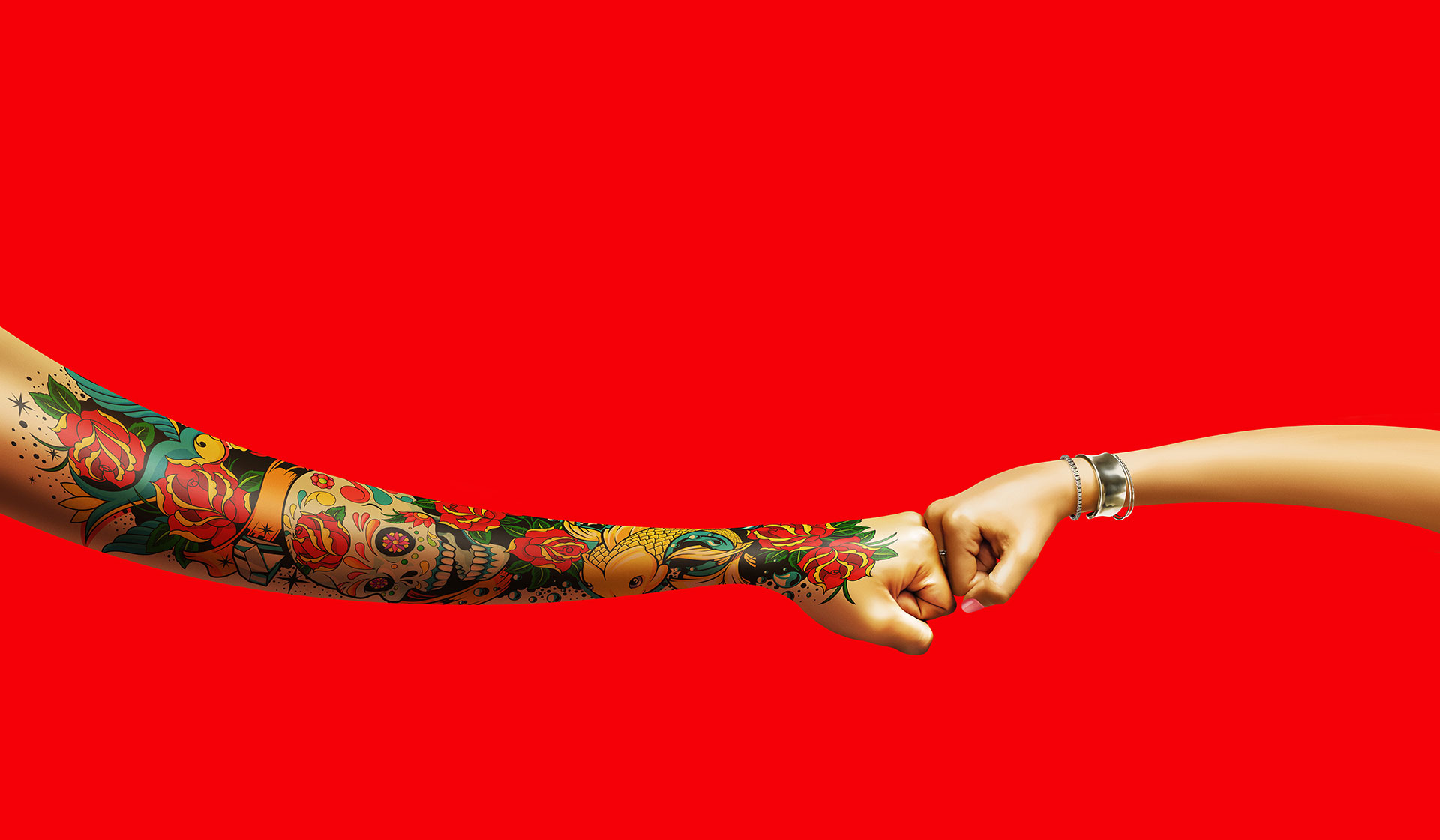
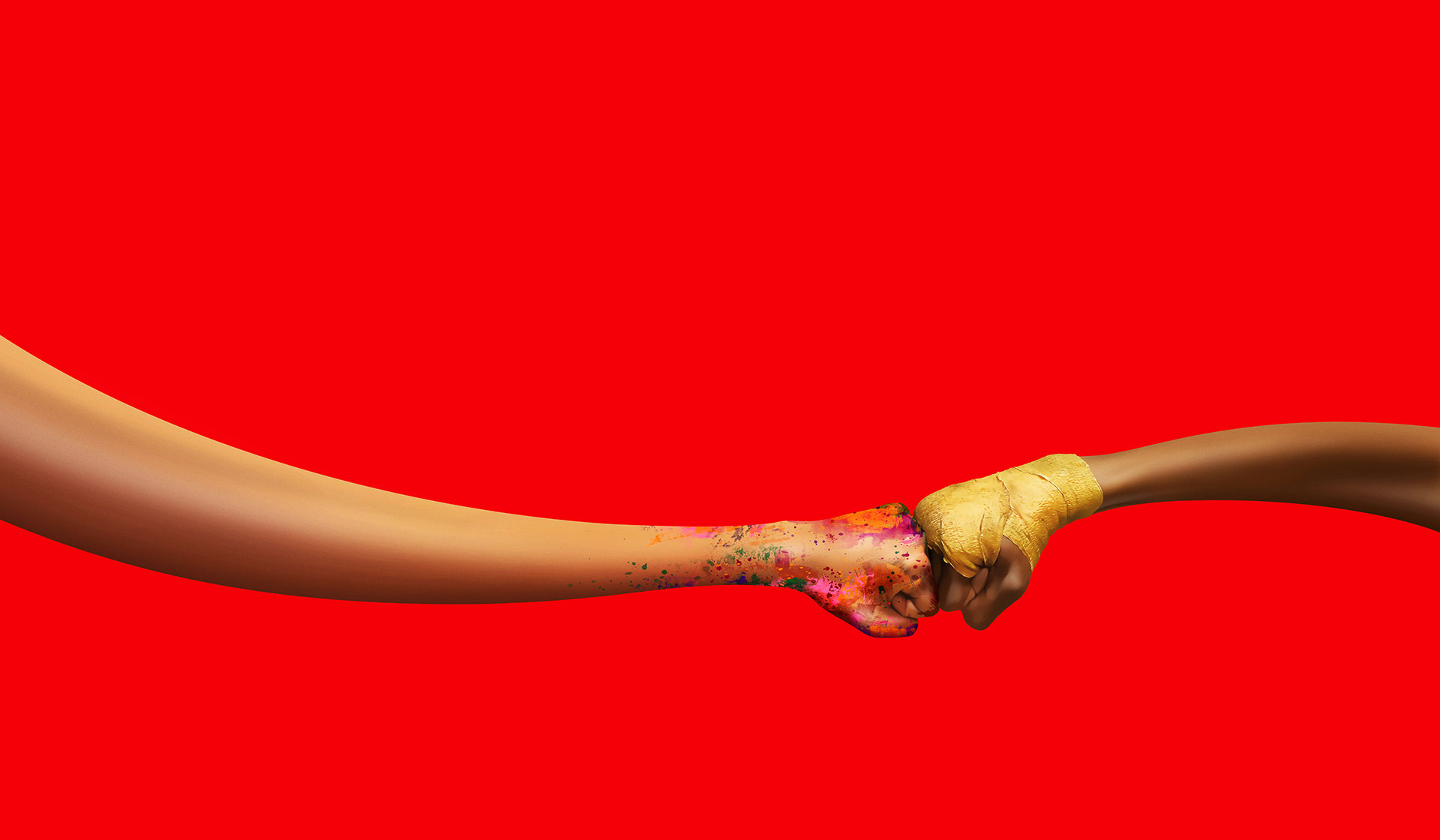
Coca-Cola has embraced a useful visual shorthand for friendship—the fist bump—in its new marketing in Latin America. But that's just the beginning of a campaign that talks frankly to teens about stepping up for friends in difficult moments.
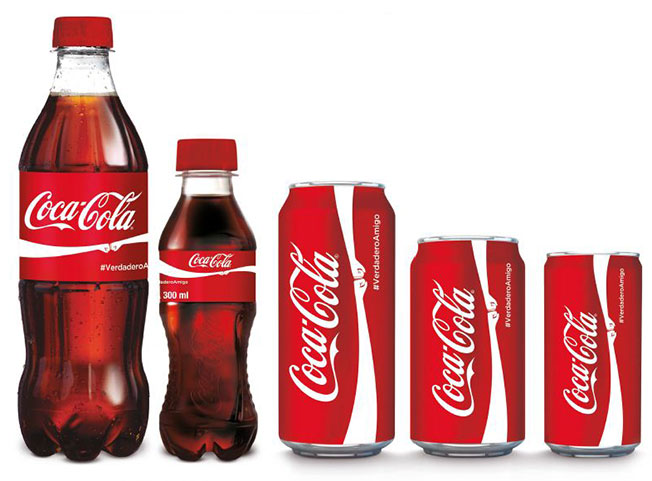
The work, by Pereira & O'Dell, includes Web films, social activation, mobile, print, TV, radio, packaging and out-of-home. The fist bump is being employed most notably within Coke's iconic white ribbon on a red background—it will even be on the packaging, and on merchandise including T-shirts and iPhone cases. (This isn't the first reworking of the white ribbon—Ogilvy won a Grand Prix at Cannes in 2012 for its own version of it.)
The broader Pereira & O'Dell campaign focuses on friendship by framing it against its opposite—the cruelty, loneliness and isolation that can be worse than ever nowadays because of cyberbullying. It's a theme Coke tried to tackle on the Super Bowl. But that work, with its grand visual metaphor for spreading good vibes online, felt a bit removed from the real social difficulties teens face. By contrast, this new work feels fresh and immediate.
The campaign suggests that shared moments offer a sense of identity and belonging. And in three short Web films (two have been released so far), high schoolers step up for their friends at crucial times—when it's uncomfortable, and requires bravery, to do so.
"The Rumor" is about a breakup and some scandalous gossip that ensues:
Click here to view

"Something Unexpected" deals with dating and an embarrassing moment in class:
Click here to view

"Coca-Cola is shedding light on what we're referring to as 'crossroad moments.' These are the times when friends can choose to step up for a friend in need selflessly," says P.J. Pereira, chief creative officer of Pereira & O'Dell. "We hope these scenarios inspire conversation among teens and put a spotlight on how we can choose not to be cruel to another human being, especially with words."
The campaign calls for teens to show not just friendship but "true friendship." The hashtag is #VerdaderoAmigo. The insight is that a true friend is the most valuable commodity at a time when cruelty is everywhere.
There is a TV spot as well, showing another moment of friendship in a time of crisis:
Click here to view

The stories are well told and memorable, and feel like they might actually have an effect on behavior, even if the fist bumps and product integrations at the end feel a little blatantly commercial.
One Direction's "Clouds" is the featured theme music across the campaign. The band will also appear in Coke print ads and Vines. The brand is also working with MTV on short documentaries about digital influencers and their own crossroad moments. Finally, the campaign will also feature Vines, print and a choose-your-own-adventure interactive video staring soccer players such as Javier "Chicharito" Hernández and Raúl Jimenez.
Print work and credits below:

Friday, March 27, 2015

How Tecate Reached 93% of Its Hispanic Target Audience on Facebook

via Ad Week

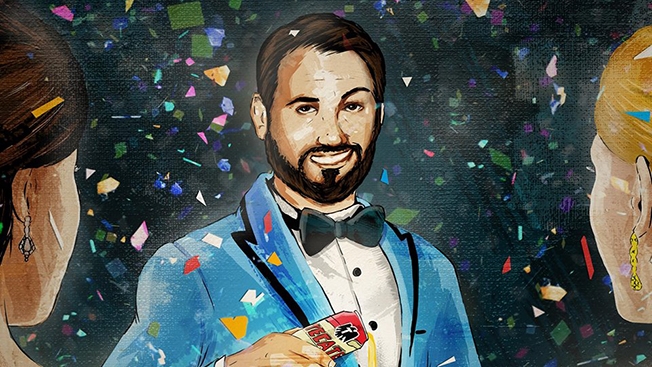
Here is the creative for a New Year's Eve-themed post for the beer brand.
While some brands have touted Facebook's advertising capabilities in recent years, other marketers and researchers have criticized the social giant, so it can be difficult to figure out if paid social media works. But Tecate shared positive results with Adweek that are insightful on a few levels, particularly the red-hot space of video. 
The beer marketer, which is owned by Heineken USA, leaned on Facebook's Anthology program during the 2014 holidays. Dubbed "Manfidence," its English-language effort pushed both Tecate and Tecate Light and was designed to be fun and street smart. And it targeted Latinos between 21 and 34 years old, marking the first time Anthology has creatively commandeered an initiative aimed at Hispanic-Americans.
Advertisement
The results were striking: the videos and static promos reached 93 percent of the target audience, an average of 10 times per person, during the six-week run on Facebook desktop and mobile. Those stats appear to reflect the effectiveness of Facebook's custom audience and retargeting capabilities. 
Tecate's team didn't reveal the total number of impressions, but given Facebook's U.S. Hispanic audience of 26 million—it's unclear how many of them are men between 21 and 34 years old—one can still safely assume that millions were served the ads.
For instance, one humorous clip alone drew 217,000 views, accompanied by the following post: "What's the best way to gain the respect of your suegro [father-in-law]? With ‪#‎Manfidence‬." Another that drew 321,000 video views employed similarly themed text: "It's not easy to impress los suegros in the kitchen. The secret ingredient? #Manfidence."
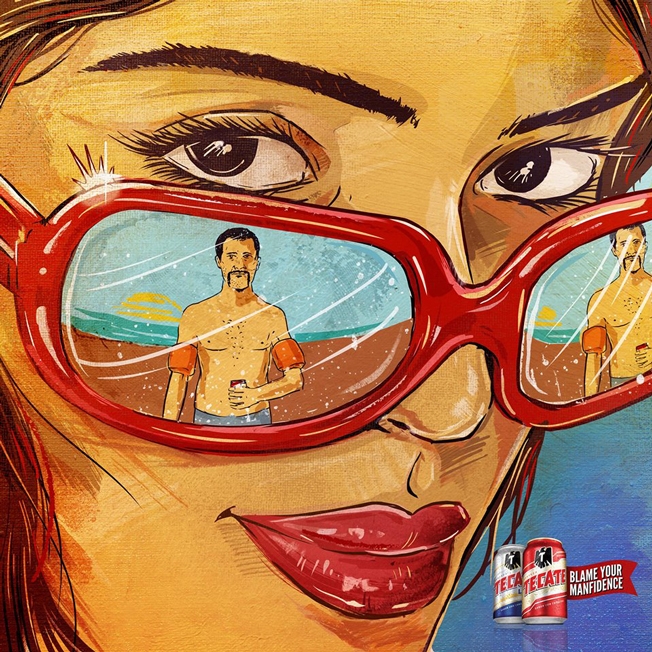
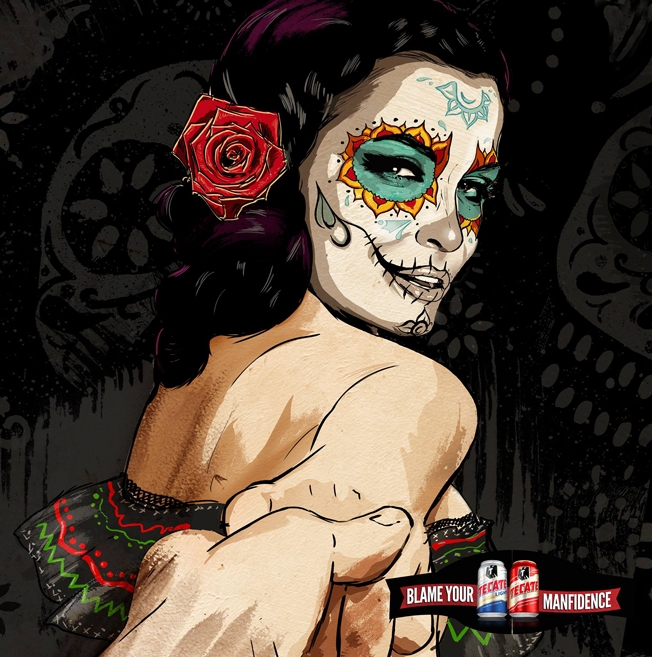
The static ads (see images above and below) were developed by Facebook's Creative Shop division, while Starcom MediaVest's multicultural department, MV42, consulted on media buys. Tecate's social ads were complemented by radio spots and out-of-home appeals. The multi-channel approach generated "off the charts" awareness among the desired demo, said Gustavo Guerra Meza, brand director at Tecate.
"It really, really connected with consumers," he said. The Facebook ads, the brand director said, brought home the message of "men finding masculinity on their own terms. Guys who are comfortable in their own skin."
At the same time, after reviewing the #Manfidence effort, Martyn Tipping, CEO of social data shop StoryScore, said he thinks Tecate could have done better if it had expanded the campaign beyond Facebook to Twitter, YouTube and other social realms.
"The campaign has clearly delivered great short-term engagement for Tecate," he said. "But Facebook and other social platforms are an opportunity to tell an ongoing brand story, not just to promote a [short-run] campaign. From that perspective, Tecate still has a long way to go in terms of building a strong, ongoing dialog with Hispanic consumers on social media."
To that end, in terms of persistent social outreach, Meza plans to continue targeting that demo with Facebook's Anthology team "because of its creative muscle" in the coming weeks and months.
Meanwhile, New York researcher eMarketer predicts that digital ad spending will hit $91 billion by 2019, and there's little doubt online video will be a major channel as the overall space grows by leaps and bounds.
So Facebook can only hope that more brands like Tecate step forward with intriguing video results, especially since the mobile video competition is heating up with the upstart likes ofMeerkat and Twitter-owned Periscope—not to mention heavy hitters such as YouTube, Hulu, Vimeo and Twitter.com. 

Friday, March 13, 2015

Pepsi's Latest Ad Campaign Has Little To Do With Soda

via Huffington Post

Pepsi wants to sell you a feeling, with a little soda on the side.
This year marks the 40th anniversary of the soda giant's famous "Pepsi Challenge" campaign, which asked people to do a blind taste test to see if they preferred Pepsi or Coke. To celebrate, the company is re-launching the challenge, complete with celebrities like Usher and Serena Williams, as well as Vine and Snapchat sensation Jerome Jarre. But instead of picking Pepsi or Coke, the new campaign asks fans to take part in sports, tech, design and music challenges.
The modernized challenge isn’t completely devoid of images of Pepsi cans, and there will be a taste test component in some markets. But the ad push centers largely around creating an emotional connection with the Pepsi brand and less on lauding the taste of its cola.
That's because the company's ethos is about more than just a bubbly drink, said Brad Jakeman, the president of PepsiCo's Global Beverages Group.
“This is a brand that has stood next to major cultural moments all around the world; it’s a brand that always operates in the consumer zeitgeist,” Jakeman said. “The brand is much bigger than a product concept, and actually that has allowed us to do a lot of interesting things with this brand beyond soda.”
It makes sense for Pepsi to minimize the campaign's focus on soda because the sugary, carbonated drink isfalling out of fashion. Americans in particular are opting more often for energy drinks and enhanced waters as the nation becomes more health-conscious. PepsiCo’s snack division, Frito-Lay, has helped buoy the company amid sluggish soda sales in recent years.
soda
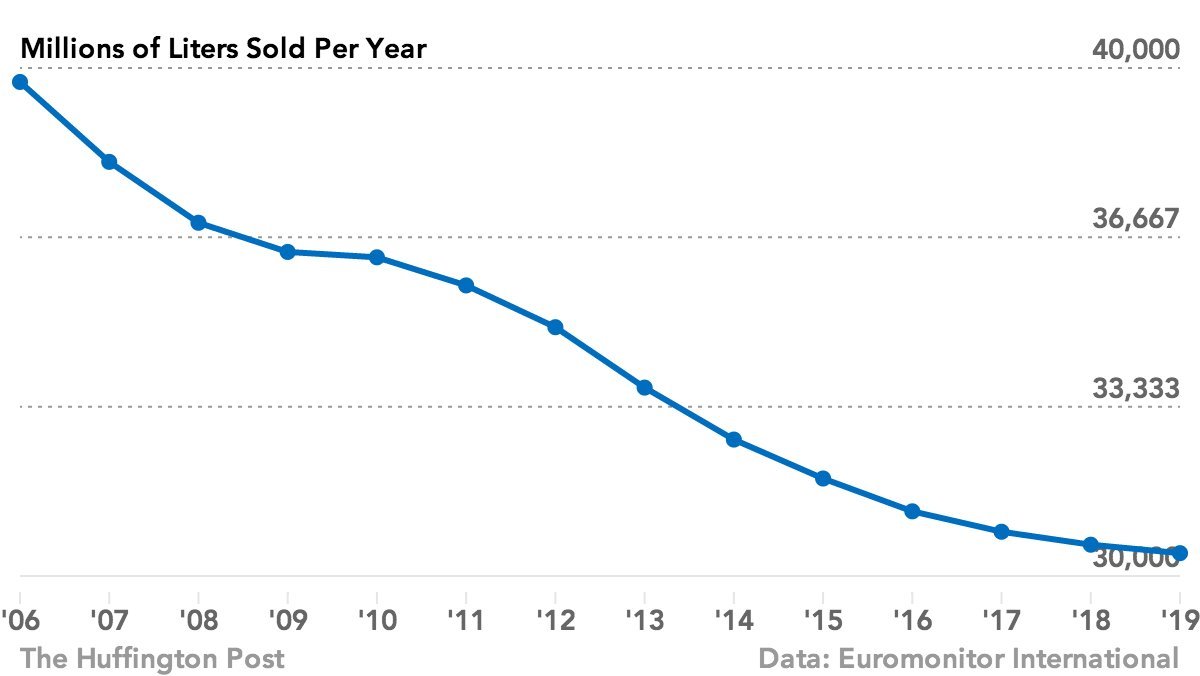
The decline in millions of liters of soda sold in the U.S.
The Pepsi Challenge was first imagined as a direct provocation to the company's main rival, Coke. At the time, Coke was a big-time national brand, while Pepsi was mostly popular regionally. As a result, Pepsi had to focus on innovations -- plastic two-liter bottles and aggressive marketing -- to make a dent in Coke’s lead, according to former Pepsi CEO John Sculley.
“Everything that I was expected to do at Pepsi was about competition with Coca-Cola,” said Sculley, who is also the author of Moonshot! Game-Changing Strategies to Build Billion-Dollar Businesses.
Forty years later, that strategy doesn’t make sense in a world where Coke isn’t Pepsi’s main problem. Now, changing tastes and smaller upstarts offering a wide array of alternatives to soda are some of the biggest threats to the company.
“If you’re Pepsi, you have to do something,” said Tim Calkins, a marketing professor at Northwestern University’s Kellogg School of Management. “Trends are not going their way.”
This isn’t a problem unique to Pepsi. Legacy companies like McDonald’s and Coke are also searching for ways to give people a warm and fuzzy feeling about their brands even as shoppers eschew their products. Coke’s Super Bowl campaign encouraged viewers to make the Internet a more positive place by adding the hashtag “Make It Happy” to negative tweets, which flagged a bot to turn the text into cute cartoon images. McDonald’s also courted controversy after the chain released an ad highlighting messages like “thank you veterans” and “keep jobs in Toledo” that franchisees often feature on the signs outside their restaurants.
“What you’re seeing now is less emphasis on the product because they find themselves in this situation where the product itself is not that appealing,” said Denise Lee Yohn, a brand consultant who has worked with Burger King, New Balance and other top companies.
It’s hard to say whether creating a halo around a brand actually translates into selling more soda or burgers, Calkins said. It's easier to track the impact of old-school promotion tactics, like giving out coupons, than campaigns based on social media.
Now, the company will wait and see what kind of success it can have with a Pepsi Challenge that relies heavily on people liking it enough to tweet about it or talk about it on Facebook. “The challenge is can they come with something that’s really compelling," Calkins said.

Thursday, January 15, 2015

Tiny Cokes: Less Guilt Means More Money for Makers

via ABCNews

Americans want to cut back on soda, and they're willing to pay more to do it.
With people drinking less soda amid health concerns, Coke and Pepsi are pushing smaller cans and bottles that contain fewer calories and, they say, induce less guilt. That all comes at a price: Those cute little cans can cost more than twice as much per ounce.
The shift means 7.5-ounce "mini-cans" and 8-ounce and 8.5-ounce glass and aluminum bottles are taking up more space on supermarket shelves. The cans and bottles have been around for a few years, but Coke and Pepsi are making them more widely available and marketing them more aggressively.
As part of its "Share-a-Coke" campaign that printed popular names on cans and bottles last year, for instance, Coke says it distributed a million mini-cans.
The focus on pushing smaller packages signals a shift from the past couple of decades, when beverage makers measured success by the sheer volume of soda they sold. Yet soda consumption has declined persistently in recent years, with public health officials blaming it for making people fat and calling for special taxes and even warning labels on cans.
Soda hit its peak in 1998, when Americans on average drank the equivalent of 576 cans of it a year, according to data from the industry tracker Beverage Digest. That figure was down to about 450 cans a year in 2013.
Instead of fighting what seems to be a losing battle, Coke and Pepsi are pushing smaller cans and bottles that give their products a sense of newness among the growing proliferation of beverage choices. The companies also say the tiny sizes cater to people's desire for more modest servings.
"Coca-Cola is so delicious, but it's like sun tanning or cigarettes — they're these wonderful things that we now know are horrible for us," said Lauren Utvich, a 31-year-old food stylist in New York, who bought the Coke mini-cans when she first spotted them.
Utvich doesn't normally drink soda, but she likes that the mini-cans turn Coke into a relatively guiltless treat. But that's not the only reason she bought them. "Let's be honest. I like them because they're freaking adorable," said Utvich, who didn't pay attention to how much they cost.
During a presentation in November, Coke's North American president Sandy Douglas said the health and wellness trend has set up "a tremendous opportunity for the Coca-Cola brand with our smaller packages."
He noted a regular 12-ounce can of Coke on average sell for 31 cents. By comparison, a 7.5-ounce mini-can sells for 40 cents. That translates to 2.6 cents-per-ounce for a regular can, versus 5.3 cents-per ounce for the mini version.
Coca-Cola said that while it may be selling less soda, smaller packs are pushing up revenue. Sales of Coke's smaller sizes — which include a 1.25-liter bottle as an alternative to the 2-liter bottle — were up 9 percent last year through October, according to the presentation by Douglas. By comparison, sales of its 12-ounce cans and 2-liter bottles edged up 0.1 percent.
That doesn't mean Coke and Pepsi are abandoning their more generous servings, which still dominate the industry. And it's not clear how big the appetite for the newer cans and bottles can grow over time. In 2013, mini-cans accounted for 1.1 percent of sales volume in supermarkets, according to Beverage Digest. But they accounted for 2.4 percent of sales dollars, more than double their volume share.

Monday, August 4, 2014

Big Soda's 'Vinyl Records' Moment: Coke Gets Back Into Glass Bottles

Via Bloomberg

Big Soda’s ‘Vinyl Records’ Moment: Coke Gets Back Into Glass Bottles
Photograph by Andrew Caballero-Reynolds/Bloomberg
When was the last time you drank Coca-Cola in a glass bottle? Not very recently, right? Well, Coke is trying to change that.
This week’s Bloomberg Businessweek cover story explores Coca-Cola’s (KO) long, slow sales decline and its attempts to bring people back to its most famous drink. One of the company’s comeback strategies is to start selling soda in smaller bottles and cans. In 2009 it introduced the 7.5-ounce minican of Coca-Cola, which contains fewer than 100 calories, and the company recently started reemphasizing the old-fashioned glass bottle.
That’s nice and all, but how well are those bottles really selling? As it turns out, pretty darn well. According to IRI market data provided by a soft-drink industry insider, sales of glass-bottled Coca-Cola grew 9 percent last year and are up another 19 percent this year. Glass-bottled Pepsi sales jumped even higher, surging 205 percent last year and 47 percent so far this year. Pepsi has much higher percentage numbers because it barely sold anything in glass bottles until recently.
The glass-bottled soda has a retro aesthetic that makes it popular among progressive, foodie-minded customers who otherwise wouldn’t be caught dead slurping something so common.
As good as this sounds for both Coca-Cola and PepsiCo (PEP), glass bottles are hardly going to be the industry’s saving grace. Sales of glass-bottled Coke and Pepsi last year totaled $123 million and $30 million, respectively, according to IRI data. In fact, glass bottles are sort of like the vinyl records of the soda industry—hip but accounting for less than 1 percent of everything we drink.