Showing posts with label music. Show all posts

Friday, November 20, 2015

Pepsi Is “Ready To Go” With Jussie Smollett As Their #NextPepsiArtist

via Vibe

Jussie Smollett (L) and Lee Daniels (R) on set of their Pepsi commercial in New York City.

From its record-breaking television ratings to its star-studded celebrity cameos, it’s evident that America has found its newest guilty pleasure in FOX’s popular series,Empire.
Like a nosey neighbor in a real-life soap opera, viewers are satiated with weekly doses of drama and scandal, mixed with meme-worthy scenes that are bound to make their way into tomorrow’s break room conversation. Although the show’s plot inspires tweets and GIFs that consistently ascend #Empire to the peak of trending topics, the Lee Daniels-co-created show undeniably fuses hip-hop and pop culture in a way that makes it hard for any of its infections songs to not stick in your head.
This same addiction has carried the first season’s debut soundtrack to the No. 1 spot on the Billboard “R&B/Hip-Hop” album chart, taken the Lyon brothers to award show stages and garnered the attention of the food & beverage conglomerate, PepsiCo.
“We’re excited to be working with Empire – the hottest show on television today,” said Adam Harter, Vice President of PepsiCo Consumer Engagement.
CREDIT: FOX
“At Pepsi, we’re always looking to create new experiences that will impact pop culture. Our partnership with Empire will allow us to reach and invite fans to have fun with us and their favorite TV show this season.”
This season, Pepsi serves as not only the official beverage sponsor, but also as the latest partner to seamlessly integrate its brand in a musical way. On Wednesday (Dec. 2), the official commercial for Jamal Lyon’s chosen track will not only appear during an episode of Empire, but also in real life in conjunction with Pepsi’s #NextPepsiArtist campaign.

Following in the footsteps of icons like Michael Jackson and Beyonce, Jussie Smollett is next up to star in the “Next Pepsi Artist” musical visual directed by the one and only Lee Daniels:
“Pepsi let me do my thing,” shared Daniels. “It’s not an experience that’s been experienced by the regular Pepsi commercial viewer before.”
Despite experiencing one of the most pinch-worthy moments of his life and career, Smollett is aware that although he’s now among some of the most influential artists in pop culture, it takes more to truly arrive in this game called entertainment:
“There are three things that happen where you know you’re on your way,” points out the actor. “Having a No. 1 album, winning a Grammy and doing a Pepsi commercial.”
What will bring the core of this campaign to life is the beat-thumping EDM-influenced record, “Ready to Go,” produced by hip-hop producer/music veteran Swizz Beatz. The South Bronx-native, who has contributed to the success of over 300 albums sold worldwide, admits the collaboration couldn’t have happened without Lee Daniels reaching out. But he also credits sharing a positive vibe in the studio with Smollett:
CREDIT: Patrick Harbron/FOX
“‘Ready to Go’ is Jussie’s graduation,” addsSwizz Beatz. “Just when you thought it couldn’t get any bigger for him, he’s ready to go to the next level. There’s always another level to go to.”
During Wednesday night’s episode, Pepsi subtly integrated a rep, who presented the campaign opportunity to the Empire team, noting that “Music is a part of Pepsi’s DNA. It has a long history of getting behind emerging artists and partnering with iconic stars.” And this is just what the global brand has continued to do effortlessly over the years.
“I salute Pepsi for investing into this situation, because we need more of this. I think he’s a great choice. His energy fits the brand. It’s not over-aggressive, but it’s right there in the middle.”
There are two more episodes until the Dec. 2 premiere of the lively Empire commercial. Could Jamal Lyon go on to be “music’s new icon”? Possibly so and the show’s home network, FOX, just might be on to something. We’ll all just have to wait until Pepsi finally adds more icing to this addictive television series cake.

Friday, February 6, 2015

Pepsi To Debut Music Platform During Grammys

via MediaPost


Pepsi will unveil a sweeps-driven music platform called "Out of the Blue" during the Grammy Awards broadcast on Feb. 8.
The brand, a longtime sponsor of the awards, will air multiple ads promoting the new program during the broadcast, including at least two featuring previous Grammy nominee Fall Out Boy (shown) and current Grammy nominee Charli XCX.
For Out of the Blue, from Feb. 8 through May 18, Pepsi will each day give away one "flyaway" trip package to an upcoming music event — two mentioned are SXSW and the 2016 Grammy Awards — for a winner and three guests. The trips will include VIP perks such as backstage passes, premier seats, artist meet-and-greets, and access to rehearsals and sound checks. 

Fans can earn chances to win by following @Pepsi on Twitter and snapping and posting a photo of any Pepsi beverage product to Twitter with #OutoftheBlue.  
Entering the sweeps will also enable fans to access exclusive behind-the-scenes videos from artists and music events. New ones will be posted weekly on an Out of the Blue site hosted on Pepsico.com.
Pepsi said that it will also release several videos on Grammys night that highlight the careers of nominees, including HAIM, Bastille, Eric Church, Brandy Clark and Sam Smith.
The brand has also recruited Grammy nominee Jhene Aiko as a "correspondent" for the new platrom. Aiko will do artist interviews and cover behind-the-scenes shoots and events, appear at Out of the Blue events, and promote the platform on Pepsi's social media channels.
In announcing the platform's launch, Eric Fuller, director of Pepsi marketing, said that it's designed to "amplify" Pepsi's long marketing association with music and music experiences, which tie in closely with Pepsi's "Live for Now" brand theme.

Thursday, February 5, 2015

"Underground" is the New EDM Buzzword

via VICE

Ultra Music Festival in Miami

Last week, Ultra Music Festival announced that when it brings the rave back to Miami’s Bayfront Park this March, it will also debut a new addition: a stage entirely devoted to "underground" dance music. This oasis of record store clerk-approved DJs will be called the Resistance stage, presumably in reference to Detroit’s politically-charged techno collective Underground Resistance. The debut lineup will feature mostly European and tech-house-leaning mainstays like Maceo Plex, Dixon, tINI, and Umek. In a statement, the festival explained the Resistance stage's formation like this: 
"It’s the urge to go against the grain, to step out of the box, to move away from the norm and challenge yourself to experience something new—to break down boundaries and barriers and abandon your comfort zone—to be able to open your eyes and ears to an undiscovered realm of electronic music."


"Undiscovered" might be a relative term. More than half of the artists on Resistance have already played at the festival before. Out of the 25 DJs who will grace the Resistance stage this year, 15 of them are Ultra veterans—including Maceo Plex, Sasha, Tale of Us, tINI, Joris Voorn, Jamie Jones, The Martinez Brothers, and Art Department. Sasha even headlined Ultra's second stage with Digweed in 2001. From Chus & Ceballos and Pete Tong to Martin Buttrich and Totally Enormous Extinct Dinosaurs, this stage is stacked more with the familiar than the new. If the Resistance stage was a Christmas present, this lineup would be a bit of a re-gift.  

Still, for those who only come to Ultra for the Tiësto and Guetta types, the sounds of these techno stalwarts is something to be discovered. Even though Ultra has hosted the Carl Cox & Friends stage for years as an alternative to the mainstage sounds across the festival grounds, so-called underground stages are popping up at almost every big, commercial dance festival across the country. Since its inception, Electric Zoo in New York City has had a Sunday School tent, named for the now-legendary Sunday School for Degenerates parties Made Event threw in mid-00s Miami in late March. Last year, they added a vinyl-only stage after premiering the concept at Mysteryland's New York debut. Both events took the vinyl concept literally, with a stage decorated with hundreds of records. Just last week, SFX sister festival Tomorrowland announced that the celebrated German DJ Sven Väth will curate an all-vinyl stage for its flagship event in Belgium this summer. 
Photo by Andrew Rauner

The rise of these alternative stages demonstrate how "underground" and "vinyl" have become the latest buzzwords in the commercial dance music world. Spurred by a growing backlash against generic EDM, ranks of DJs and dance music fans have grown tired of generic build-ups, drops, overwrought toplines, and heart-hands-in-the-air moments and now want something different. The formula of the EDM sound has long-since reached parodic levels, with Saturday Night Live spoofing Avicii with its "When Will The Bass Drop?" sketch, and MAKJ literally taking the piss with a banger by sampling his own toilet sounds. Even mainstage mainstays like Tiësto and Martin Solveig have backed off from the concept of EDM.

In some ways, the popularity of underground stages at dance festivals is an acknowledgement that the big sounds that brought dance music to American radio and EDM to marketing gurus the world over is no longer fashionable. These stages also solve the problem of how less mainstream but still immensely credible artists like Dixon and Tales of Us are able to fit into festivals with Hardwell and Steve Aoki on the mainstage while appeasing the growing group of dance music fans who have a yen for fresher sounds. Behind the scenes, agents have resisted having their "cooler" acts sharing the bill with commercial EDM DJs. Now, they'll be in a special section instead. Even as Ultra announced that it will be 18-and-over for the first time this year, its audience still skews young. The Resistance stage will expose these younger ravers to artists they're not yet old enough to see in a club setting. While Resistance and the like may be mere marketing ploys, the benefits of this new addition to festival culture lie in the future audience of techno. 

In truth, this trend is part of an age-old cycle wherein counter cultures are embraced as an alternative to mainstream options and then buoyed into greater popularity. Hip-hop, alternative rock, new wave, punk, disco and even EDM itself were all once part of an underground of their own, far from radio, Billboard charts and Grammy categories. Embraced for being different from the dominant sounds of a time, they eventually became the dominant sounds of their time. There's nothing inherently wrong with this progression; protesting it usually makes you sound like a grouchy old snob. It's important that fans know the difference between something that is truly underground and something that is just marketed to look like it is.  

As Ultra is still a super commercial festival with a ticket price that would prevent many people from attending, (three day passes are $450 now, as $300 and $380 passes have sold out), one could argue that the underground dance scene is one that operates outside of this kind of economy. No matter how many credible, underground artists Ultra, Electric Zoo, Tomorrowland, or others book, as long as these festivals charge stratospheric ticket prices, they can never really replicate the underground experience fans and artists seek as an alternative to mainstream festival culture. After all, the objective of these events (and their publicly-traded owners) is to make money. 
It is perhaps the underground's indifference to profit-based motives that is its best protection against dilution by popularity. That might be the greatest resistance of all.

Tuesday, January 27, 2015

Pepsi's Music Chief Makes the Super Bowl Sing On the brand's ties with artists like Katy Perry

via AdWeek

"At Pepsi, music and sports are part of our DNA," says Emma Quigley. | Photo: Joshua Scott
Emma Quigley, who joined PepsiCo last October as its first North American head of music, is a heavy hitter in music, having spent the previous two years leading global marketing efforts at Capitol Music Group, with earlier senior stints at EMI and Universal Music. When she joined the beverage giant, Quigley said one of her central goals was to forge relationships with emerging artists. But as the Super Bowl approaches, Pepsi's music mantle rests with superstar Katy Perry, who will head this year's halftime extravaganza.

Adweek: What's your mandate at Pepsi?
Emma Quigley: Pepsi has an incredible history in music. I intend to not only keep that tradition alive, but to also look at new ways of working with artists and with partners. Most days are filled with meetings, brainstorming and strategizing with the brands on platforms, programs and artist discussions. In between meetings, I catch up with labels, agents and managers.
My mandate here is to maintain the stellar legacy Pepsi has held for so long and continue to find ways to help us evolve and grow even further. Among other things, I'm currently looking at ways we can work with emerging artists in 2015 that will have a noticeable impact. We're also going to be working with partners that strengthen our presence in the music space.

So it's not all about superstars?
Our millennial consumers are all about discovering new artists, and Pepsi is helping to bring them a wide range of new content. Sites like Pepsi Pulse and our Artist Spotlight Programare vessels for sharing content—like our recent work with Nico & Vinz, Mayaeni and Sebastian Mikael.

What makes an artist a great match for the brand?
The Pepsi consumer comes from many different demographics. As a brand, that means our music partnerships have to span a range of genres, from pop to country to urban to Latin.

What is a deal or music play you've done for Pepsi since you joined? 
My first major project [last November] involved working on our "Operation Halftime" event in Corpus Christi [Texas], featuring Blake Shelton. It was an amazing concert held on the USS Lexington for veterans and their families, which was turned into a TV spot that aired on Thanksgiving Day and kicked off our "Hype Your Hometown" campaign. Blake already had a strong history of partnership with the brand, and the nature of the event lent itself perfectly to this artist-brand partnership.

Brands today can potentially have more marketing impact for artists than record labels.
I would not discount the labels. We are not invested in artists in the same way the labels are, and it's always a lot easier when you have the ability to cherry pick. That said, there is a lot of clutter out there right now, making it difficult for artists to gain traction. Brands have the ability to cut through the clutter in a powerful way.

Do you get pitched by bands?
I do not receive demos from artists. I come across things organically and always keep my ear to the ground. But more times than not, I work with a fantastic team of people who regularly bring new music to my attention.

Is your Pepsi role similar to what you did at Capitol?
The role is very different. At PepsiCo, I have the opportunity to work with an incredibly diverse wealth of talent in a multitude of ways. It's a different challenge every day. Coming from a label, I bring a different perspective and also the unique understanding of how artists like to work with brands.

Why is Katy a great fit for halftime?
Katy Perry is a pop culture icon. Pepsi actually has a history with Katy that precedes the halftime show. We partnered on her 2013 Video Music Awards performance below the Brooklyn Bridge and helped promote her documentary Part of Me. We know millions of women tune into the Super Bowl, a number that is increasing every year. As a brand we are mindful of the purchasing power this strong demographic holds.

So, she primarily appeals to female viewers?
Katy appeals to everyone. She is one of those rare artists that is loved by men and women, young and old, and everything in between.
Lenny Kravitz is also on the bill. How does signing a '90s rocker fit into Pepsi's strategy?
Anytime you can pair artists across eras or genres you are going to get an increase in viewership and the breadth of audience you will reach.

How will Pepsi measure the success of the show?
The experience starts earlier than the actual Super Bowl. That's why this year, we really wanted to enable fans to get excited ... well before the 12-minute performance. Earlier this season, we kicked off our "Hyped for Halftime" campaign, unleashing the spirit of halftime in ways that are bigger, better and earlier than ever before. We're starting the conversation in a way that drives Pepsi to own the halftime conversation for weeks leading up to the show.

Why is it smart for brands to leverage pop music?A brand like Pepsi is able to reach an already existing, and excited, fan base of artists that otherwise might be difficult to reach. And the same goes for artists when they partner with the right type of brand.

What's your advice for brands looking to play in the music-sports space?Sports and music programs, like any brand partnership, need to feel truly authentic, delivering a message the brand stands for in a way that is truly engaging for the target consumer. At Pepsi, music and sports are part of our DNA—we live and breathe it much like our fans do, so it is a natural fit for us to engage in such spaces.

Tuesday, January 6, 2015

Bands and Brands: Universal Music Partners With Havas

via AdAge

Havas and Universal Music are launching the Global Music Data Alliance, a partnership both companies hope will create new revenue streams by mining the data provided by consumer behavior around Universal's artists.
The partnership has been driven by the Bolloré family: Vincent Bolloré became chairman in June 2014 of Universal's parent company, Vivendi (as well as being its biggest shareholder, with a 5% stake). His son Yannick Bolloré is chairman and CEO of Havas, whose biggest shareholder is also the Bollore Group. There has been frequent speculation that Mr. Bollore hopes to someday combine Havas and Vivendi. Both companies are based in France.
Dominique Delport, global managing director of Havas Media Group and chairman of Havas Media in France and the U.K., has been closely involved with the deal. He said, "There's been a will to foster a collaboration between Vivendi and Havas, and Yannick saw a way to provide fresh insights for clients."
Yannick Bolloré said in a statement, "This Global Music Data Alliance will allow our clients and other brands to further expand their common passion for music with fans, and create deeper experiences for them."
The alliance will be launched this week at the Consumer Electronics Show in Las Vegas by Lucian Grainge, chairman and CEO of Universal Music, and Yannick Bolloré, during a cocktail party where Universal artist Nick Jonas will perform live.
Taylor Swift
Taylor Swift
Universal Music is the world's biggest music producer, with artists including Taylor Swift, Kanye West, Lady Gaga, Adele, BB King, Cher, Elton John, Katy Perry, Pearl Jam, and U2.
Mr. Grainge said in a statement, "We want to continue to find new revenue and marketing opportunities for all of our artists by …supercharging our efforts to realize previously untapped revenues from consumer brands and other new business partners."
Universal already runs the Artist Portal, which measures music and video sales, streaming, social media, airplay, merchandising and ticket sales. The alliance hopes to use Havas' behavioral data to identify new marketing opportunities for brands and artists.
Mr. Delport said, "We are bringing in talent from both sides. Universal is already the leading music company in terms of data, and we are taking it to the next level by bringing in Havas data scientists and algorithm experts, merging the two worlds."

AD AGE 

It's unclear whether any brands have committed to being part of the Global Music Data Alliance; Mr. Delport wouldn't name any. He said, "The biggest trend in the industry is for brands and entertainment to work together to co-create content and services. We will have so much data that we can leverage for the purpose of better understanding the consumer and creating better experiences – there is so much to invent – we need to be bold enough to create new solutions."
The main hubs will be cities like Los Angeles, New York, London and Paris where Universal Music and Havas already have large operations. Mr. Delport said that Asia will be equally important.
"We understand that music is less siloed than before and consumers may jump from classic to hip hop," he said. "This isn't just about teens, it's the whole music world – and it's all very focused on business, on creating messages that are more and more relevant. We are not here to produce surveys."

Wednesday, November 5, 2014

Pepsi Debuts New Music Videos From Sebastian Mikael, Mayaeni For Artist Spotlight Program

via Billboard


sebastian mikael
Sebastian Mikael attends Fan Fest - AT&T, Geico, Poetic Jeans, Sneaker Con, Tennis, Xbox, Health And Wellness, Nickelodeon, Opening Concert, Centric Centrified during the 2014 BET Experience At L.A. LIVE on June 28, 2014 in Los Angeles, California. 
Jerod Harris/Getty Images for BET
Pepsi has debuted the two latest installments of their Pepsi Pulse Artist Spotlight program -- two original music videos for rising artists Sebastian Mikael andMayaeni. The installments, produced by Complex Media and debuted on Pepsi’s YouTube channel and at PepsiPulseArtistSpotlight.com, follow the August premiere of a Pepsi-sponsored U.S. edition of Nico & Vinz’s “Am I Wrong” music video.
The focus on collaborating with artists right at the beginning of their careers runs parallel to Pepsi’s dual focus on working with superstar acts like Beyonce, Blake Shelton and Usher. As Emma Quigley, Pepsi’s recently appointed North American head of music (the first), told Billboard last month, “We're really looking for new ways to collaborate with artists -- to see how we can be part of their growth trajectory.” Quigley adds of the collaborations with Mayaeni and Mikael, “Each video was a true collaboration between artist and brand to bring the vision to life.”
As part of the Pepsi Pulse premieres, Swedish-born singer-songwriter Mikael released his new video for “Made For Me,” an R&B duet with singer Teyana Taylor. The track is featured on Mikael’s debut album Speechless, released via Slip N Slide Records in June. Currently based in Brooklyn, the 26-year-old played an acoustic set for Pepsi executives earlier this year at New Jersey’s MetLife Stadium, which included “Made For Me.” After his performance, Mikael and the Pepsi team “started bouncing ideas off each other of what we could do,” he recalls, “ and it’s been crazy surreal ever since. I’m still a new artist, and it’s crazy that they would take a chance on me.”
Detroit-based singer-songwriter Mayaeni, who is prepping her upcoming debut full-length for release via Roc Nation, was similarly enthused to get a Pepsi push for her latest single “Black Jeans” and its accompanying music video, calling the collaboration a “rewarding experience.” Mayaeni adds, “It was cool to see my vision come to life, and have my hometown Detroit be a part of it.”
Pepsi isn’t the only major brand putting its marketing muscle behind lesser-known musical talent. Red Bull just kicked off a 30-day L.A. concert series called Sound Select, featuring critical darlings like Future Islands, Run The Jewels and The Julie Ruin. And American Express announced its own emerging-artist programon November 4, AIR (Artists In Residence), which is set to feature Betty Who, Mary Lambert and Rixton. Even Kraft Foods/Mondelez International’s Sour Patch Kids is getting into the indie arms race by establishing a free residence in Brooklyn’s Fort Greene neighborhood to house acts like Saint Pepsi, Magic Manand Kitty Cash during their current tours in exchange for original content.

Wednesday, August 20, 2014

Deutsch LA Makes Music With Snapple

via MediaPost

Snapple is singing a new tune. Parent company Dr Pepper Snapple Group and AOR Deutsch LA have introduced new creative that uses only the brand's bottles, bottle caps, and tea as the campaign's music. 
"The overall idea was to create a fun graphic way to enjoy the brand," says Pete Favat, chief creative officer, Deutsch LA. "We wanted to create sound out of bottles. Which we did. Snapple only comes in glass bottles and we thought a distinguishing sound for the brand could come from the glass and caps. We wanted the brand to feel crafted, to feel charming, to feel natural. An iconic product needs an iconic sound."
The spots (here’s one) launched on network and cable television, along with digital placements in May and continue to air and run online through the end of September. In addition, Deutsch funded and developed a behind-the-scenes version tracking how the Deutsch LA team "made" the music that runs across social media channels.
"Everyone knows that Snapple is made from the Best Stuff on Earth," says Favat. "The idea behind this campaign is to showcase Snapple’s 'Best Stuff' from the product out. From the way we romance our teas and juices, to the way we talk about them in our playful, witty tone of voice, this campaign is unmistakably Snapple. We even used Snapple's iconic bottles to create a unique soundtrack for the brand. The flexibility of this campaign allows Snapple to play in more places and enables Snapple to be more playful and cultural at every touch point." 
Meanwhile, Snapple's partnership with America's Got Talent is delivering millions of impressions during the shows and through its digital specific campaign. And executives just announced a three-year sponsorship agreement with the San Francisco Giants, which will give Snapple pouring rights in AT&T Park and bring Snapple teas and juices to attendees.
Although Dr Pepper Snapple Group declines to specify ad spend per brand, the beverage brand spent 7.8% of its sales on advertising and promotions in Q2 2014, which is in line with its historical average of 7.5%-8%, according to company financial filings. Deutsch LA has worked with Snapple since 2009.

Friday, July 18, 2014

The Curious Mechanics of EDM and How It Became Distinct From Electronic Dance Music

via HuffingtonPost

2014-07-17-tomorrowland.jpg
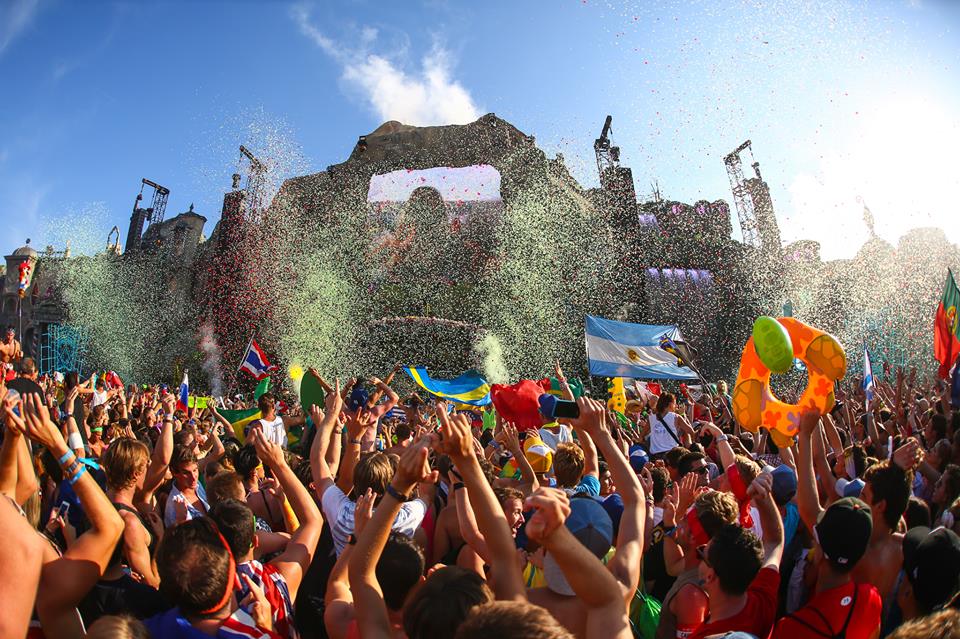
Over the next two weekends, the People of Tomorrow will witness floating stages, pyrotechnic phenomena, fountains, flamethrowers and flowers dropped by helicopters. They will camp in DreamVille, push buttons on their bracelets to keep in touch, and find the mythical key to happiness. They are 360,000 deep, they hail from 220 countries, and they are here for the largest electronic dance music (EDM) festival in Europe. Their stories will live on in the Book of Wisdom, and in the photos and videos they are statistically more likely to share before, during and after an event than their non-EDM peers.
The 10th anniversary of Tomorrowland will bring approximately 400 DJs to 20 stages. But according to many, the festival experience far eclipses the music: a phenomenon unique to EDM. The smoke and mirrors (often literally) of lasers, lightshows, projections; the neon aesthetic of rave culture; the associated drugs and alcohol, the tutting, twerking, and the PLUR handshaking kandi kids -- all these things constitute an attraction of their own. The music isn't always center stage. This year, Electric Daisy Carnival (the largest EDM festival in the world) sold out before the lineup was even released. According to a 2013 Eventbrite study, over a quarter (28 percent) of EDM fans don't listen to the music but still like going to the events. And a significant percentage of fans considered the event venue and promoter to be just as important as the artist performing when it comes to purchase decision (80 percent and 38 percent of fans, respectively).
These facts, along with dispensable income and social networking tendencies of EDM fans have bolstered the global EDM market to the tune of $6.2 billion dollars (with some valuations as high as $20 billion). As Diplo told SPIN, "A band plays, it's 45 minutes. DJs can play for 4 hours." In Vegas, that will turn a crowd over twice -- in the middle of the day. Nightclubs there are giving casinos a literal run for their money: XS, a club inside the Encore Resort brings in between several hundred thousand and a million dollars a night. And consequently, DJs, promoters and venues are making out with tens of millions annually for their efforts.
The commercialization of EDM has embittered fans and DJs alike, causing Deadmau5 to rename the genre "Event Driven Marketing" at the 2013 South by Southwest festival. Inevitably, things are sacrificed for the spectacle and there are many who believe music quality is one. "It's so big now it's just getting milked," Avicii told the Guardian. "Originality is definitely missing from EDM." "I feel like I've heard 10,000 DJs playing the exact same sets," DJ & producer Porter Robinson told Do Androids Dance last summer. And the ever inflammatory Deadmau5 chimed in this spring: "EDM all sounds the same to me."
However, the demand for the genre remains relentless. Tomorrowland is rumored to have sold out in seconds. As the International Federation of the Phonographic Industry (IFPI) 2014 Digital Music Report revealed, urban and dance music "consistently 'over index' on streaming services, which means that record companies are striving to sign more artists performing in these genres."
As musicians and fans alike begin to dissociate their electronic dance music from the mainstream commercial glow of the acronym EDM, and simultaneously more EDM is produced, the proliferation of the genre has been remarkable. Take, for example, the absurdity and multiplicity of the following tracts: brostep, techstep, drumstep, luvstep, thugstep, two step, darkstep, funkstep, hardstep, jazzstep, breakstep -- all are subgenres of either Dubstep, Garage, or Drum and Bass.
To be fair, genre lines are always amorphous at best, but within the realm of electronic dance music, the distinctions are especially weak. House, techno and trance all conform to a static 4/4 time signature, kick drum on every beat, high hat click to the off-beat (16th note), a repetitive structure and similar harmonic/melodic construction. We can talk semantics around trance's tendency to build up and break down its repetitions, or the tweaked instrumentation that seems to accompany techno -- but those slights of character would never make or break a category in classical, jazz, or rock.
In any case, as subgenres flood the scene, and commercial interests continue to inflate the EDM bubble, the People of Tomorrow will descend unperturbed. They're there for the experience. And in Tomorrowland, there's little a bubble wand can't solve.